
 EN
EN



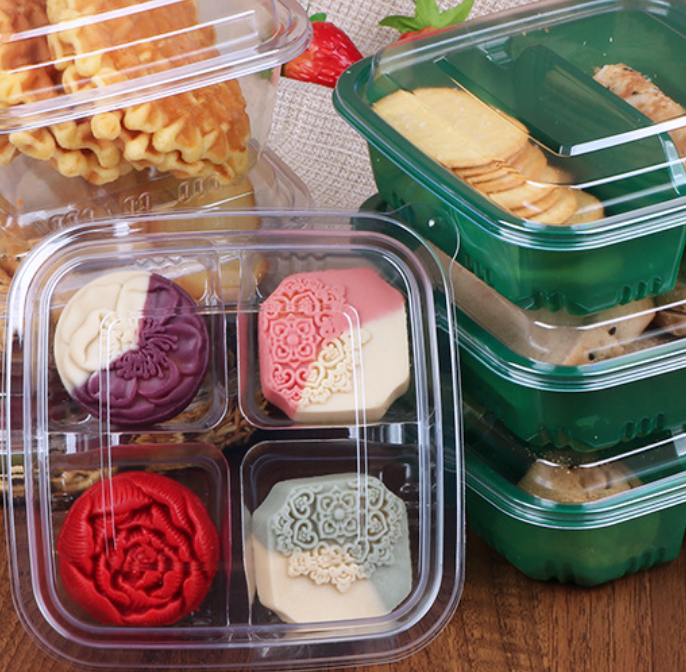
Choosing Between Virgin and Recycled PET for PET Box Applications
When manufacturers consider PET Resin for box applications, they need to keep in mind the performance, sustainability, and compliance to regulations. For food applications, Virgin PET is the only option as it has a consistent molecular structure, and it meets the requirements of the FDA and the EU without additional certifications. Virgin PET has excellent clarity and has a high tensile strength of over 55MPa, which is why it is used for high-end food retail packaging.
The use of recycled PET, known as rPET, reduces carbon emissions by approximately 30 to 50%. However, challenges remain. rPET has to be filtered to eliminate unwanted contaminants. After processing, remaining rPET can emerge as particles that make the final product cloudy or compromise the toughness of the material. For instance, rPET can be up to 20% less tough and impact resistant. rPET encourages a circular economy, but food packaging companies face challenges. Packaging food in rPET packaging materials means that companies have to obtain certifications for food safety, including ISO 22000 standards and the EU's 10/2011 regulations. Testing requirements that accompany these regulations ensure that contaminants from the rPET do not leach into the food, including antimony and acetaldehyde.
These properties of Melt Flow Index, Crystallinity, and Thermal Stability, and their Interdependence.
These properties impact the thermoplastic forming of PET, which in turn, can impact the output, the dimensional accuracy, and the amount of PET that can be recycled.
As for deviations, excessive crystallinity in the sheets will result in stress cracking at the trimming stage. Insufficient thermal stability will lead to polymer degradation at its standard thermoforming temperatures. It is also important to ensure compliance with ASTM D5927 standard for all resin specifications before extrusion.
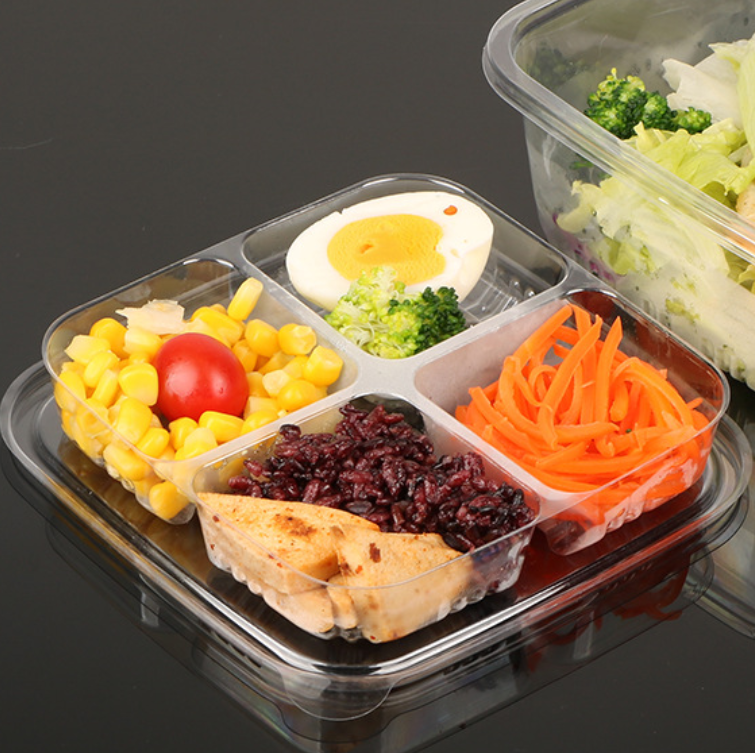
Sheet Extrusion: PET Box Blanks Made to Exacting Standards
PET sheet extrusion will transform the resin into blanks that are dimensionally stable and suitable for high speed thermoforming. Since PET is also very hygroscopic, it is imperative that the pellets are dried at a temperature of 160-180 C for 4-6 hours as prior to use as they are prone to a type of hydrolytic degradation which is a leading cause of a decrease in IV (intrinsic viscosity) and a subsequent increase in embrittlement.
In the extruder, the temperature of the barrel is carefully controlled to stay between 280-300°C to keep the melt viscosity in the optimal range and to prevent any thermal degradation. Other important factors include:
- uniformity of melt flow to within ±0.05 mm of target thickness across the entire sheet width
- screw configuration that optimizes the degree of shearing for the purpose of molecular weight reduction and maximizes the homogenization of the melt
- control of crystallinity; optimal combination of the amorphous phase for processing and the crystalline phase for structural integrity
After the melt leaves the flat die, it is processed in a 3-zone polishing stack to smooth the melt surface before the controlled cooling zone. The chill rolls in the cooling zone, which are set between 10 and 30 °C, help control the rate of cooling, which is crucial in determining the crystalline structure of the final product. Rapid cooling results in a soft final product due to the decrease in the rate of crystallization. Slow cooling is also detrimental as it promotes the uncontrolled growth of small crystals, resulting in cloudiness and poor shape retention. The final processing steps include real-time thickness control, edge trimming, and winding under controlled tension. During the thickness control operation, sensors continuously monitor the sheet thickness and automatically adjust the die lips to maintain sheet thickness variation within 5%.
This step is crucial as winding tension, if misaligned, creates microscopic cracks, and distortion issues in the end products.
Thermoforming PET Sheets into Functional PET Boxes
Converting amorphous PET sheets into solid, usable boxes requires careful thermal and mechanical work due to PET’s limited processing range and its tendency to shrink when stressed.
Plug Assist Versus Vacuum Only Forming: Balancing Wall Thickness Uniformity and Cycle Time with PET Box Production
In plug-assist forming, material is stretched with a preform prior to the application of the vacuum. This helps to achieve a consistent thickness in the deeper regions of the clamshell containers or the nested tray designs. The difference, as far as wall thickness is concerned, is quite significant: plug-assist +/- 0.1 mm, vacuum alone +/- 0.5 mm. This translates to fewer weak spots and better overall strength of the product. The downside to this is that plug-assist operations are slower with cycle times in the range of 10-15 cycles per minute due to the additional moving mechanisms. However, for some applications where the material strength is very crucial, this is a strong point to consider.
With vacuum-only forming, the plug step is removed, allowing for quicker throughput (15-20 cycles/min).
Parameter - Plug-Assist Forming - Vacuum-Only Forming Walls with Uniformity - High (±0.1 mm variation) - Moderate (±0.5 mm variation) Cycle Speed - Slower (10-15 cycles/min) - Faster (15-20 cycles/min) Suitability - Deep-draw PET boxes (e.g. clamshells) - Shallow trays or lids High-Speed Inline Form-Fill-Seal Integration: Real-World Performance at 240 bpm for Retail PET Boxes Inline form fill seal systems today combine several steps all in one smooth process. They heat sheets, shape them, load products inside, and then create those tight seals everything needs. There’s no flow wrapping or hand assembly, and therefore, no risk of manual point of contact contamination. They also have a new generation of servo controlled mold sets, autonomous zone temperature control, and quality control AI vision systems, which has increased throughput for the sized regularity retail pack PET boxes, like the 12 oz berry containers, to 240 boxes per minute. Customers have reported a 30% decrease in labor costs after switching to this system. Overall equipment effectiveness (OEE) has improved by an average of 22% as well. Compliance with FDA rules and regulations for direct food contact has not been an issue with this system.
That's the reason why the producers of fresh fruits, baked goods, and beauty products are using this as their main solution for high capacity packaging.
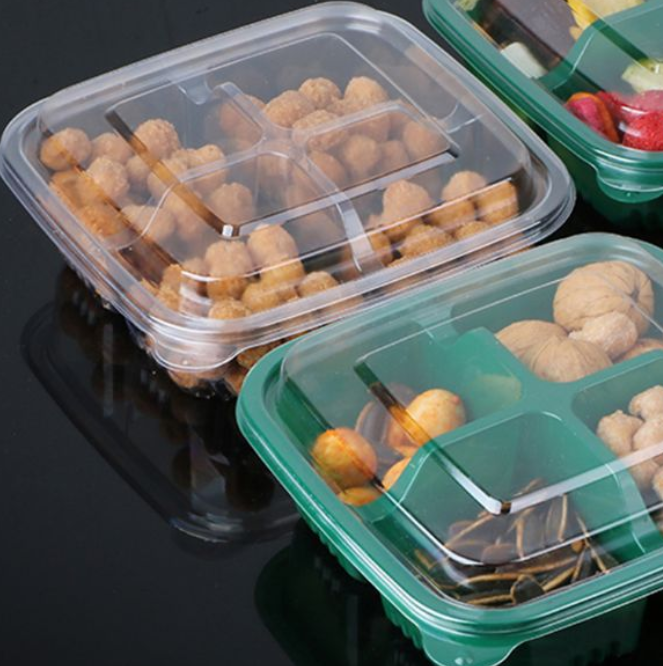
Finishing, Decoration, and Quality Control for Ready-to-Market PET Boxes
Fabrication, UV Coating, and Functional Coatings (e.g., Anti Fog) for Improved PET Box Attributes.
Die cutting or laser trimming is defined as the removal of any excess material (flash) to offer a defined edge, which is critical for the automated stacking, robotic picking, or full seamless integration of the packaging to the downstream packaging lines. UV curable ink technology provides resolution, high abration graphics directly applied to the surface of the PET yielding “on surface” brand identification eliminating the need for secondary packaging and labels.
Functional coatings (e.g., hydrophilic anti fog) provide excellent user experience in refrigerated or humid environments, eliminating the condensation which makes products difficult to see. Coated PET boxes have been independently shown to provide a 30% improvement in moisture permeation compared to uncoated PET, increasing the shelf life and marketability of perishable products to consumers.
Leak Testing, Dimensional Checks, and FDA/ISO Certifications
Every PET box is subjected to multi-tier quality assurance methods. Helium based leak detection allows the identification of leaks smaller than 0.5 µm. Pressure decay testing provides seal integrity under distribution simulated pressures. Laser scanning of critical parameters is done to within ±0.2 mm to determine lid fit, hinge clearance, and base flatness, which allows for compatibility of high speed fillers and cappers.
Before compliance requirements are reviewed, we must perform FDA-required extractables and migration testing (under 21 CFR §177.1630), heavy metal (Pb, Cd, As, Hg) testing, and provide traceability and process control documentation in compliance with ISO 22000. Certified facilities are required to have 99.8% rejection thresholds to ensure they are defect-free prior to retail distribution in order to comply with customer requirements.
Frequently Asked Questions
What are the benefits of choosing virgin PET instead of recycled PET? Virgin PET has better clarity, tensile strength, and compliance with regulations. Because of these traits, virgin PET is a better option for retail packaging that is visually high-end.
What are the benefits of using recycled PET? Recycled (or rPET) has 30 to 50% less embodied carbon. rPET has issues such as increased cloudiness and less impact resistant, however, it is important for the circular economy.
What is the significance of the Melt Flow Index (MFI) in PET thermoforming? An MFI of 0.8–1.2 dg/min is required. This range is needed for proper balancing between being able to fill the mold and to adequately control the formation of flashing. Thermoformed products outside of this range will have defects.
What do functional coatings do for PET boxes? With the help of functional coatings such as anti-fog layers, PET boxes can be used in more situations due to less condensation forming in and obstructing the view of the contents.
In what ways does the inline form-fill-seal process boost efficiency? The inline form-fill-seal process helps efficiency by combining steps and reducing the number of times the product is manually handled, i.e. less exposure to contamination and more overall process efficiency. This process satisfies FDA guidelines.
Table of Contents
- Choosing Between Virgin and Recycled PET for PET Box Applications
- Sheet Extrusion: PET Box Blanks Made to Exacting Standards
- This step is crucial as winding tension, if misaligned, creates microscopic cracks, and distortion issues in the end products.
- With vacuum-only forming, the plug step is removed, allowing for quicker throughput (15-20 cycles/min).
- Finishing, Decoration, and Quality Control for Ready-to-Market PET Boxes
- Leak Testing, Dimensional Checks, and FDA/ISO Certifications
- Frequently Asked Questions