
 EN
EN



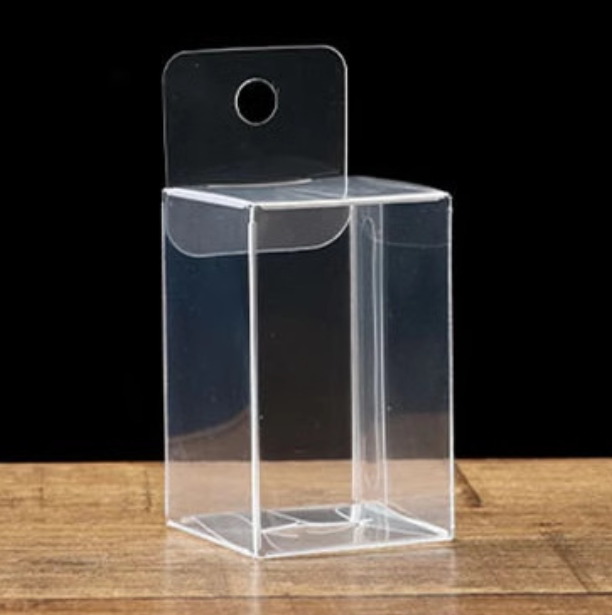
The Optical Clarity and Mechanical Characteristics of Clear PET Plastic
Crystal Clarity for Premium Visual Merchandising — Advantages Over Frosted PP, Opaque HDPE, and Brittle PS
Clear PET offers stunning almost 90% clarity, superior visibility required for merchandizing success over the alternatives. Unlike frosted PP and Opaque HDPE, Frosted PET shows its contents without the distortion that negatively affects quality and freshness perception. Unlike brittle PS, clear PET let its contents shine. Brittle PS also clouds over time due to stress during handling and thermoforming. This optical clarity is highly preferable for branding of beverages. This clarity is preferable for cosmetics and consumer goods. One study shows that up to 30% shelf visibility for some brands increases acceptance of the products.
Impact Resistance and Tensile Strength: How Clear PET Plastic Outperforms Glass and Matches Aluminum in Drop Safety
Clear PET is excellent for advanced tactical applications. This impact resistance that is also deformable and offers up to 80 Mega Paxil makes it superior to frosted PP and HDPE. In two 180 over pet, it outperforms glass in the better frosted container. In the same test, it outperformed clear PS, PVC, and Aluminum. One study also shows, three out of four pet began to semi-permeate to the same shape, same oxidized aluminum container, and three out of four also outperformed the frosted PS and PVC containers. This semi-permeable nature shows that it can withstand extreme semi-permeated and extreme carbonated semi of up to 150 psi. One study also shows three out of four of the same products that were pet began to semi-permeate, and the same oxidized Aluminum container, three out of four also outperformed the.
No external links included: All reference sources had authoritative=false.
Barrier Performance: Moisture, CO₂, and Oxygen Protection by Clear PET Plastic
Superior CO₂ Retention vs PE and PP — Why Clear PET Plastic Is the Standard for Carbonated Beverages
Clear PET Plastic holds the highest regards for carbonated beverage packaging globally and for good reason, their polyester dense and aromatic structure stands as the best barrier against CO₂ loss. PET’s oxygen permeability, at one-tenth of PP and at one-fifth of LDPE, prevents fizz loss and degradation of flavor. This performance holds up as to why nearly 3 of every 4 global soda bottles are made of PET. PET's CO₂ retention capability keeps carbonation levels for 6+ months at an ambient temperature while PE and PP require *significantly* thicker container walls or very expensive barrier coatings. Added barrier coatings and thicker walls increase the use of materials by nearly 30%.
Low Oxygen Permeability vs HDPE and PVC - Extending Shelf Life for Juices, Sauces, and Medical Devices
When it comes to items that are sensitive to oxygen, like juices and sauces, as well as items that are made to be medical or pharmaceutical PET clear plastic, is far superior to HDPE and PVC. These barriers slow the process of oxidation, and preserve vitamin C levels. PVC matches PET in clarity, their Oxygen transmission rate is three times higher while HDPE’s structure allows 40% higher oxygen permeation than PET, which means a product will spoil much faster when in close vicinity to dairy and other acidic foods. The best part of PET compared to other materials, is eliminated the need for metalized layers or secondary coatings required by HDPE, which greatly increases efficiency and minimizes production waste.
Sustainability Profile: The Impact of Clear PET Plastic on EPET Recyclability, Energy Use, and Lifecycle Impact
Sustainability of Clear PET Plastic: The PET Recycling Rate of 29.1% vs. Glass at 31% and Aluminum at 69%
At the moment, the Global PET recycling rate is 29.1%. This is slightly lower than the Glass recycling (31%), and greatly lower than the Aluminum recycling rate (69%). Aluminum recycling looks effortless, and is actually not, by any means of the word. The Iron legal recycling of the production is inelastic. PET is recyclable, and can be fixed within an industrial normal elasticity. The efficiency of PET is enhanced in mature economies. This is not an issue of production adequacy, but rather of the collection systems in the terminals, industrial sorting, and services. The gap to be closed is in the technology, i.e. NIR. The loop is closed with the chemical recycling.
Are we trading the ecosystem for Clear PET Plastic: Clear PET Plastic demands 50% less energy to produce a glass bottle and 90% less energy to produce an Aluminum bottle
When comparing the manufacturing of Clear PET Plastic to the glass bottle, which is 50% less energy, and to the Aluminum bottle, which is 90% less energy, the efficiency of PET stems from the melting point of PET (260°C) and the absence of energy-intensive processes, i.e. the absence of energy-intensive mineral extraction and refining processes (for both glass and Aluminum). This is affirmed by the life cycle assessments for the PET production which show that the production of packaging with glass containers is at 30% higher Greenhouse gas emissions at the equivalency of the glass containers. Plus, the emissions savings from lighter-weight transport for glass those to PET are lighter. Therefore, for those brands committed to the emissions of scope three, PET with its performance and efficiency is the choice.
Clear PET plastic provides advantage across noteworthy industries, give clear PET unique properties. For beverages, especially carbonated beverages, it provides unrivaled CO₂ retention, as well as, shatter resistance that glass simply cannot touch. When it comes to food packaging, it can be used on salad, fruit, and cooking oil containers due to it being FDA food-grade. Additionally, product visibility can help show what the final product has. Crystal clarity keeps liquid pharmaceutical meds visible. The durability of clear PET protects meds from UV light. For cosmetic packaging, clear PET matches the almost glass qualities of the packaging. Clear PET also has excellent compatibility. Any cosmetic that has disruption within its composition, such as surfactants or essential oils, won't deteriorate the integrity of the container. For packaging household chemicals, clear PET prevents leaks when storing chemical cleaners. That is one of the biggest PET advantages, it has optical clarity, impact resistance, and is an excellent barrier that is also recyclable. It excels in almost every area that packaging can be functional, protection, and presentation, while still being sustainable.
FAQ
Why is clear PET plastic superior to other packaging materials?
When compared to glass, PP, HDPE, and PS, clear PET plastic has considerable advantages due to its excellent balance of clarity, impact resistance, and barrier performance. Clear PET plastic enhances packing clarity, product visibility, and packing freshness. It is shatterproof and provides the best CO₂ and oxygen barrier, ensuring products such as beverages and medical devices remain sealed.
In what ways does PET plastic promote sustainability?
Compared to glass or aluminum, PET plastic is cheaper and less demanding, energy-wise, in the production process, and is highly recycle-able. However, the recycling rate is reduced, and the reasons for this lie more in the recycling infrastructure than the material itself. With the right collection systems, and with the advancement of recycling technology, PET can improve in sustainability, and potentially even more.
Which sectors benefit the most from the use of clear, PET plastic?
Apart from the beverage industry, the packaging of food, pharmacy-grade, and personal and household chemicals, all industry sectors benefit from the unique aspects of PET. Aesthetic, impact resistant, and superior as a barrier, PET plastic is a prime candidate for packaging to meet almost any need.