
 EN
EN



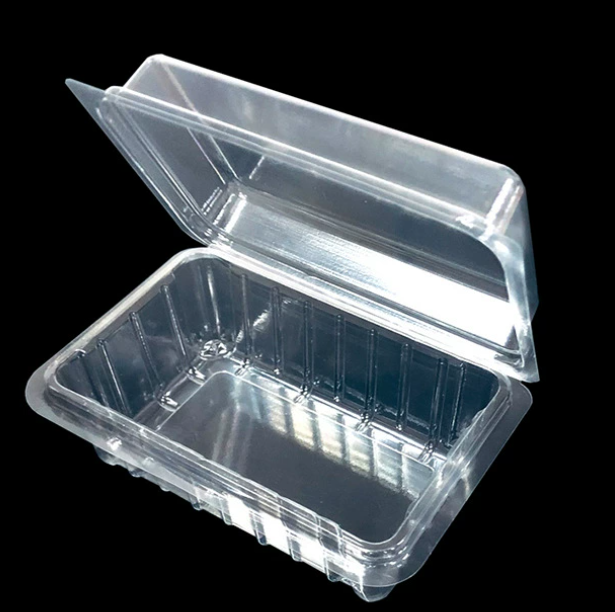
How Clear PET Plastic Became the Best Sustainable Packaging Option
When it comes to sustainable packaging, PET Plastic remains the best option, not just for its sustainability, but also its performance. Being transparent, PET Plastic makes the product more appealing, especially in the highly competitive food and drinks industries, and consumers are more likely to trust with transparent packaging. These elements also help to keep liquids in the containers, maintaining the integrity of the product. PET provides the best barrier to any contamination of the product. PET Plastic also has the best availability of recycling infrastructure. PET has the fastest recycling rates in the world. Bottles can be remade into more bottles, lowering the need for more resources. It has the lightest weight of glass and aluminum while also making it the most environmentally friendly option. Clear, PET Plastic provides the least for emissions. It also helps to be the most flexible for the circular economy when finished with the product. All of these things are what makes PET Plastic the best option for packaging containers for drinks and food when looking to be sustainable, for the performance of the product, for the health and safety of unresourceable things, for the cost, and for the effectiveness.
Improving Sustainability through High-Performance rPET in Clear PET Plastic Packaging
The Compromise Between Food-Grade rPET Specifications and Scalability
When trying to scale the use of rPET, achieving a balance between food-grade safety compliance and the retention of optical clarity becomes essential. The FDA and the EFSA require rPET to prove ≤0.5 ppm (parts per million) of contaminants, which is accomplished through advanced super-cleaning technologies. Modern inline filtration systems maintain a purity of 99.97% during the remelting process. This ensures the end product maintains a crystal-clear visual quality, that is, if the product is aimed to compete with virgin PET performance. The leading facilities today have produced rPET with haze levels below 2% and have recently achieved food-contact compliance. This is a 65% improvement from the standards set in 2018, driven by proprietary internal decontamination and crystallization. This elimination of past inter-industry, intra-industry, and inter-market trade-offs is verging on the visually quality and regulatory standards.
The Balance Between Clarity and Recycled Content (50–100% rPET)
The incremental increase in recycled content comes with optical challenges which stem largely from polymer physics. Examples of this would include at 50% rPET, polymer chain degradation through the process of mechanical recycling results in typically higher yellowing; 15 - 20 ΔYI units. These challenges can be mitigated if careful engineering is completed.
There is blue and violet color correction achieved in 70-80% rPET blends, which serve to neutralize the amber hues.
Chain extender additives, to remedy the molecular weight loss, and still keep towards a majority rPET formulation threshold, can be used in 90-100% of rPET formulations.
Photo-oxidation induced discoloration can be mitigated by the use of UV stabilizers.
It is recently found that the implementation of 100% rPET can be processed at ≤ 3.0 haze value when less than 30 seconds of residence time occurs and the temperature is maintained below 260° C, while even virgin PET ends rPET has the cause to be claimed to be the latter in clarity. The acceleration in the market demand to meet circularity commitments suggests that the already present performance gap is going to be remedied by a number of processing innovations.
Infrastructural Challenges of True Circularity of Clear rPET from Bottle-to-Bottle Recycling
For Circularity to be achieved in Clear rPET, the system must operate without the contaminating elements in the recycling streams, including the multi-material components of stickers, non-compatible, non-washable, inks, labels, and more. These components either remain on the pack for the entire recycling process, severely degrading the rPET value, or more ultimately eliminate its reusability for food-grade products. Material recovery facilities refuse to accept more than 80% of heavily contaminated PET recyclables (The Recycling Partnership, 2023).
There are three design options for removing the barriers of these sticky components:
The use of mono-material construction minimizes the need for sorting requirements, and cross-contamination.
Label-free technology (embossing, or laser engraving) creates a demand for a label, adhesives, or paper substitutes.
Inks that are designed for recycling-dissolvable, wash flake, and color-grade consistency.
A 10% weight reduction = 7% reduction in carbon emissions (PET Resin Association, 2023).
Infrastructural Challenges of Closing the Loop on Clear rPET from Bottle-to-Bottle Recycling
The challenges of Circularity in Clear rPET lies in the gaps of the collection, sorting and recycling processes, and not in the material. Regional imbalances of progress in the upgrading of Materials Recovery Facilities (MRF) leads to a lack of availability of high quality feedstock for recycling, and the combination of food, and non-recyclable packaging, further, increases the contamination of rPET.
U.S. Recycling Rates, Collection Systems and APR Design Certification Impact
U.S. reds shallowing PET in part due to the challenges of fragmented collection systems and variable contamination control. The national rate stood at 28.6% in 2023, (U.S. EPA) but due to sorting inefficiencies and incompatible packaging, the yield of food-grade rPET remains considerably low. The APR Design Certification program is a response to this concern, and offers guidelines that have a strong basis of science per packaging that would be able to function well in existing collection systems. As more companies begin to implement more Cert Design packaging, there is a substantial increase in the demand for premium rPET with a positive correlation to most packaging merging with infrastructure. This also drives quicker transition towards modified systems that allow recycling of bottles back-to-bottle.
FAQ
What is PET plastic and why is it sustainable?
PET plastic is one of the best options for sustainable packaging. This is so due to the barrier protection, clarity, highly lightweight and cost-effectiveness of it which all support enhancing its sustainability.
Clarity and Safety of rPET versus Virgin PET?
Many technologies such as decontamination and advancements in crystallization have enabled rPET to be in compliance to food-grade rPET and be equivalent to virgin PET in terms of performance and optimally rPET is able to also be highly clear.
What challenges exist with higher recycled content in PET packaging?
Higher recycled content in PET packaging can lead to more yellowing and other changes for PET packaging. This can be remedied by the use of color correctors, UV stabilizers, and chain extender additives.
How can brands improve PET packaging's recyclability?
Brands can make PET packaging more easily recyclable by designing with a mono-material structure, using incompletely washable label, and using recyclable or no inks. This would allow for a reduction of packaging washing and therefore increase ease of recovery systems.
What challenges do we still face in achieving full-cycle PET recycling?
Challenges include, but aren't limited to, insufficient collection and processing infrastructure, contamination, and design elements that reduce the ability to produce high-quality rPET.