
 EN
EN



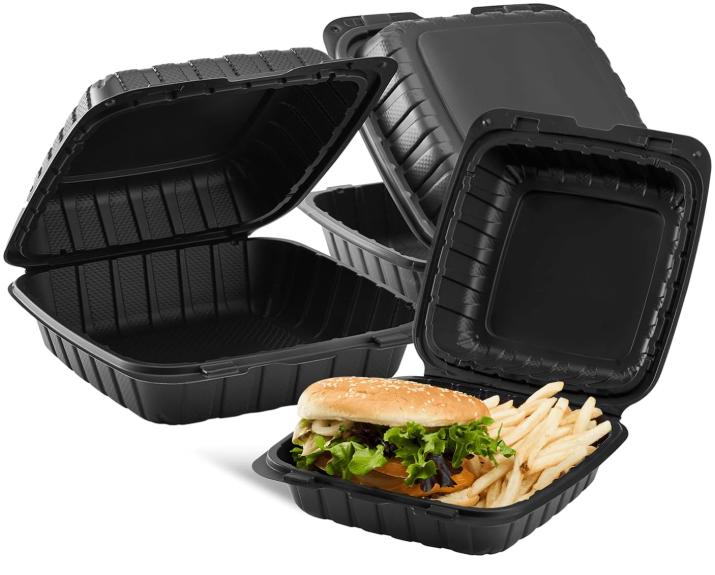
Core Functional Design Principles for PET Clamshell Packaging
Hinges Polymers and User Repetitive Interaction
When considering the PET clamshell packaging, the hinges should be designed so that they can perform at least 50 cycles of opening and closing the packaging. When closing the packaging, the snap locks should give an audible click, and when opening it, the user should not be bothered by any resistance. Most designers tend to position the hinges 3-5 mm from an edge to distribute the stress better and prevent the formation of micro cracks. The new thermoforming technology allows the production of living hinges and the thermoforming of zones with different thicknesses to provide flexibility in the area of the hinge and to provide higher resistance to closing the hinge clasps. In addition, such efficient designs are highly appreciated as hinge failure is the second largest cause of returnable plastic packaging, with an average of 23% of plastic packaging hinge failures, according to Packaging Digest last year.
Ergonomic Form Factors and Retail-Ready Structural Features
Construction of consumer friendly PET clam shells includes thumb notches 15-20mm deep and textured grip zones which provide a required force reduction of 40% for ease of opening as opposed to a die cut grip area with smooth finish. To provide retail operational efficiency, the foot print of the base structure is designed to fit the vertical shelf and automated order fulfillment system height. Notable structural design elements include:
Stackability: Self-alignment interlocking ribs for vertical stacking 8–12 units stable and without deformation
Hanging features: 8 mm reinforced flanges die cut for stronger pegboard hanging
Shelf impact: Controlled and specified wall thickness 0.25-0.4 mm to provide optimum visibility of the product and minimize yellowing under UV light
All of these features facilitate a seamless flow from distribution center to point of sale. Retailer-Ready functionality is the most important feature needed by 92% of retailers (MHI Annual Report 2024).
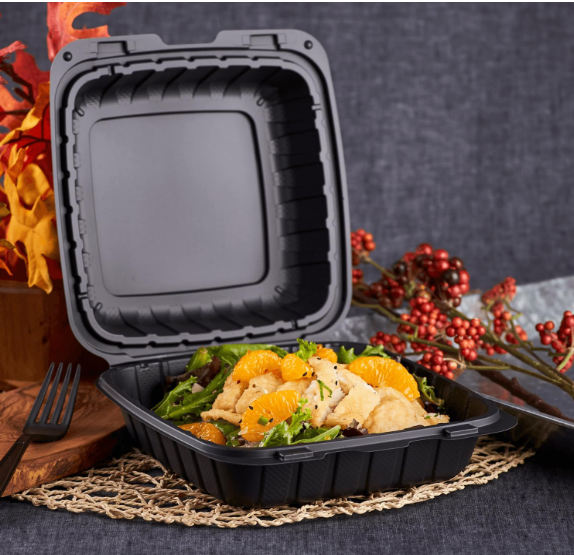
Material Selection and Performance Optimization in PET Clamshells
Clarity, Haze Control, and UV Protection in Colored PET Clamshells
Achieving good optical characteristics in PET clamshells is primarily related to the combination of process and formulation. For example, an optimal melt flow and minimum dullness resulting from crystallinity formation, is achieved if the injection molding process is done between 260 and 280 degrees Celsius. This causes a light diffusion rate of less than 5%, which is a critical requirement for PETs used in transparent packaging. As for the colored versions, UV light absorbing additives must be used, such as the aforementioned benzotriazoles, which reduce light transmittance below 5% for light wavelengths of 380 nanometers, providing protection for UV sensitive products, such as pharmaceuticals. Uncontrolled UV exposure can cause a decrease in potency of medicines between 15 and 30 percent per year, according to the research published in the Journal of Photostability. With this research in mind, packaging designers face the challenge of balancing the amount of pigment added to the clamshell walls, which will be uniform and remain at a thickness between 0.4 and 0.8 mm, in order to remain transparent to the standard of 90% transparency that consumers expect from products in clear plastic containers.
On Colored PET and its Optical Properties
Limitations of Barriers and the Coating/Laminating Strategy
Despite its excellent moisture barrier properties, (<0.5g/m²/day) PET has an oxygen transmission rate that is nonsuitable for sensitive products like sliced meats (8-12 cc/m²/day) and thus, multilayer options offer a solution:
At 0.5um thickness, nano-silica coatings offer a 70% reduction of O₂ transmission
With a 25% increase in material costs, AlOx laminates offer an O₂ barrier of < 1 cc/m²/day
The hybrid of PET and EVOH adds complexity to recycling but significantly improves the dual barrier performance.
With optimal design, these elements allow for an increase in the shelf life of the product by 40-60%. Furthermore, to remain within existing PET recycling systems, the barrier layers must be <3% of the product’s total mass (Packaging Sustainability Review 2023).
Sustainability Integration: Adoption of Recyclability and rPET in PET Clamshell Packaging
PET Clamshells’ NIR Detection and Sorting in Recycling Streams
NIR sorting technology identifies and sorts individual types of PET plastics based on their spectral signature. Currently, clear PET clamshell containers are sorted and recycled correctly 95% of the time in most recycling facilities, whereas darker colored clamshells are sorted correctly only 40-70% of the time due to their significantly lower NIR reflectivity. For recycling systems to work, clamshells must be constructed from only one recyclable material without any metal coatings, PVC, or strange adhesives that create non-recyclable mixed streams. In general, clamshells work best when their wall thickness is less than 1.5 mm, and they are free of the dark dyes that interfere with sensing technology. If constructed to these guidelines, used PET clamshells can still retain most of their value after being processed and can be used to create rPET as a valuable raw material.
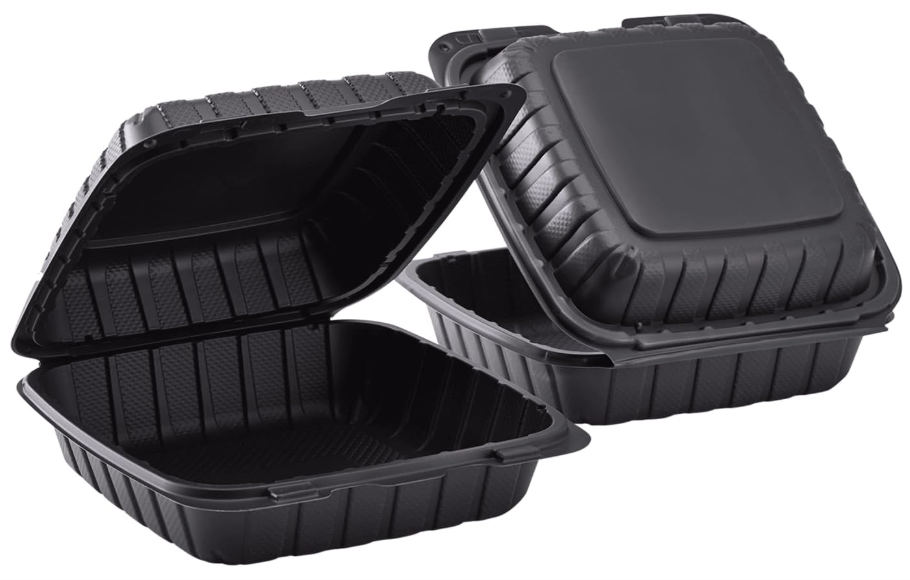
Mechanical Performance and Shelf-Life Stability with 25–50% rPET Content
Using 25 to 50% recycled PET (rPET) in packaging components significantly adds to the sustainability of the packaging while still maintaining essential functions in packaging. Most packaging companies incorporate around 30% rPET in their clamshell containers. This level of rPET enables the companies to achieve approximately 92% of the original PET’s strength and impact resistance as reported in typical ASTM (D638 and D256) tests. These results are suitable for normal retail applications. Increases in rPET content above this level (i.e., in the range of 40 to 50%) can induce about 15 to 25% more haze in the containers but do not appreciably impact barrier and protective performance. Selective UV additives are included to combat the damage and degradation that occur more quickly with recycled material blends. These additives are intended to prolong the shelf life of the packaged product. The pharmaceutical industry has determined that virgin PET, when used as an inner layer, and rPET as an outer layer, offers shelf life extensions of approximately 20% compared to typical options. This solution is ideal for packaging with sensitive medical products that have extended shelf life requirements.
Frequently Asked Questions (FAQ)
What is an advantage of using PET clamshell packaging?
Clamshells made of PET packaging provide clarity as well as product strength and protection, which is suitable for both retail and shipping protection.
In what ways does hinge design influence the durability of PET clamshell packaging?
When hinges are engineered correctly, packaging becomes more durable and more user-friendly, as the hinges are designed to operate for many opens and closes.
What is the role of UV protection in PET clamshell packaging?
Light-sensitive products such as medications can deteriorate under UV exposure. Therefore, medication-clamshells require UV protection to ensure the product's quality.
How does rPET support sustainability?
By using recycled PET(rPET), the packaging's performance is not compromised while reducing environmental impact, conservation of resources, and support recycling initiatives as rPET is made from reused materials.