
 EN
EN



Using Tritan for Pricing, Safety, and Environmental Benefits
US and EU Regulations Regarding Food-Contact Safety of Trays
In the case of food-contact supermarket trays, manufacturers must ensure compliance with a multitude of cross-regional regulations. For example, in the USA, the FDA 21 CFR examines not only material safety, but the potential chemical migration from trays into food. In Europe, EU Regulation 10/2011 covers the tracking and documenting of not harmful/ non-toxic materials, especially for the food contact materials. Local laws must also be considered. For example, in California, Proposition 65 requires a warning declaration for the presence of styrene and/or antimony. When it comes to compliance requirements, there are several things that manufacturers must concentrate on.
1. Declaration of compliance to FDA/EU-approved polymers (i.e. PP, PET)
2. Demonstration of compliance to migration testing under anticipated storage & transport conditions
3. Trays marked with permanent “food-safe” symbols (where self-evident use is not clear)
4. Traceability
Non compliance can lead to severe penalties (over $500,000 per violation (FDA Enforcement Report 2023)), thus, it is critical for manufacturers to maintain an adequate level of documentation.
Common Issues In Tray Management: How Staff Training, Sanitization, and Reuse Can Break Down Supermarket Trays
Operational failures erode legal compliance. Food Safety Magazine reports only 42% of retail employees receive training for proper tray handling, resulting in serious neglects:
Trap Trays: washing trays at temperatures under 160°F allows for Listeria biofilm to form
Improper Reuse: Cracks in trays can trap salmonella regardless of surface cleaning.
Cross Contact: no barrier film when stacking raw meat trays with produce.
Failure to Visually Inspect: 68% of contaminated trays had no visible abuse
These failures are in line with 31% of supermarket recall cases. Food Protection Trends states this, which highlights the need for tray design and enforcement.
Risks in Tray Design for Supermarkets Regarding Migration and Material Safety
FDA Approved Uses and Safety Profiles of Bio-Based, PP, PET, and PS Trays
The production cost of polystyrene trays is fairly low, and therefore they have become ubiquitous in many food packaging situations. However, they have some limitations with acidic or fatty foods where over time styrene may migrate into the food. As for PET materials, they have good clarity and are also resistant to oils. Therefore, they are often used for beverages and cold ready meals. This is justified under 21 CFR 177.1630 of the FDA regulations. Polypropylene is also preferred because it can withstand temperatures of about 100 degrees Celsius. As such, it is used for hot deli products and microwaveable containers as referenced in 21 CFR 177.1520. There is also growing interest in some bio-based alternatives such as PLA which is produced from corn starch. Although these materials profess to be compostable, they require some precautions as they have a tendency to deform when exposed to temperatures above approximately 60 degrees Celsius.
Manufacturers are required to perform migration tests using acetic acid or ethanol to make sure that the food packaging has no harmful chemicals that could leach into the food during storage and consumption. Only after successful migration tests can the packaging materials be sold to distributors.
Material Key Safety Attributes Primary Supermarket Applications
PS Low cost, rigid Bakery items, dry produce
PET Oil-resistant, clear Ready meals, beverage carriers
PP Heat tolerance (100°C) Deli counters, microwave meals
PLA Compostable Organic produce, chilled salads
When Does Supermarket Tray Leaching Become Dangerous?
Some conditions exacerbate the risk of toxic leaching from trays. First, leaching occurs at temperatures over 40 degrees Celsius, secondly, extreme acidity and alkalinity (anything below 4.5 and above 9), and third, when food is in packaged and at room temp for more than 24 hours. As an example, leaching of antimony from PET trays increases 300% after 24 hours when food is kept at room temperature – and elevated temperatures further exacerbate such leaching. Hot food in polystyrene containers pose the same leaching hazards and can cause migrating of styrene above the FDA's 0.1% limit by weight. Also, some bio-based trays break down when in contact with untreated (unprocessed) citrus fruits due to hydrolysis. Stores should take care of implementing some protocols.
Reduce the length of time products are displayed. Don't expose products to direct or prolonged sunlight. Always store products at the appropriate temperatures. These practices check tray safety standards and quality of the food.
Preventing cross-contamination is vital when it comes to tray engineering for supermarkets as well as protocols surrounding it.
Tray design: drainage, stackability, surface geometry
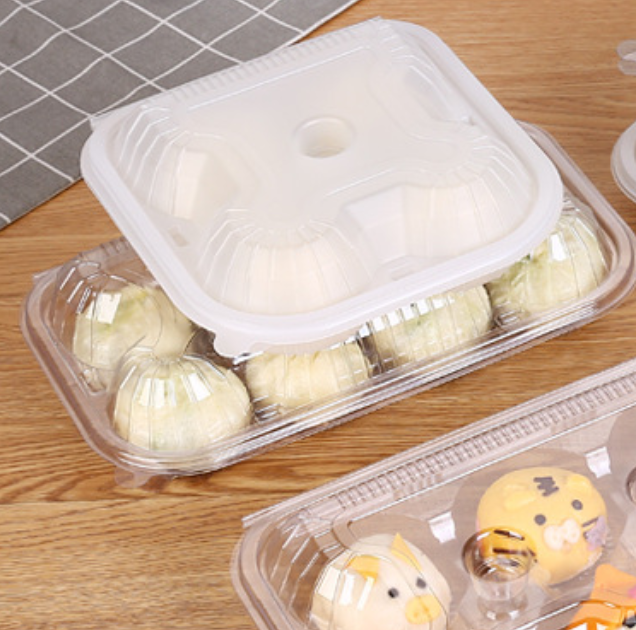
Supermarket trays do a good job preventing cross-contamination due to their thoughtful design for the purpose of mitigating risk. Star traps channel water to promote bacterial growth, such as Salmonella, to a significantly lesser degree than their previous flat tray counterparts. Testing of the trays exhibited a reduction of bacterial growth of approximately seventy percent. Trays that are designed for stackability, with spacing facilitated for airflow and increased drainage, are to be cleaned. Take up less space in storage and provide increased drainability. Surface shape is often an overlooked quality of a tray. Rounded and smooth surfaces are less susceptible to biofilm trapping such as grooves and channels. These design features assist in mitigating the tip of the iceberg of the actual crime that is the created as a result of the design of fresh food displays. Risk of the display in the often-contaminated food exhibits.
Best practices for Shelf Placement, Rotating, and Visually Inspecting Supermarket Trays
Good operational practices and good physical practices create safety across the board. It is important to create zones for different uses, including keeping raw meat trays away from ready to eat items to contain harmful bacteria. In terms of managing stock with FIFO, color coding the labels works for staff to understand what is in need of attending to in a way that avoids a decline in quality. Trays must be inspected on a daily basis for signs of deterioration. Small cracks and even stains can become a breeding ground for harmful organisms. When a tray is visually unpleasing, staff should document and remove the tray from service as studies show that almost 33% of contamination issues come from broken or worn surfaces. It is also important to have routine intervals (eg. every 3 months) to check and remove anything that may pose a risk from the system.
FAQ
What are the main regulations for trays that come into contact with food?
This includes FDA guidance, EU guidance, and specific local regulations, including California's Proposition 65.
What materials are supermarket trays made of?
They are made of PS, PET, PP, and PLA. Each material has a different safety profile and application.
How does design of trays prevent cross-contamination?
Design features such as drainage, stackability, and geometry of the surfaces help mitigate the microbial risk.
What operational practices help trays stay safe?
Tray safety can be improved with proper shelf design, regular cleaning, and tray safety inspections.