
 EN
EN



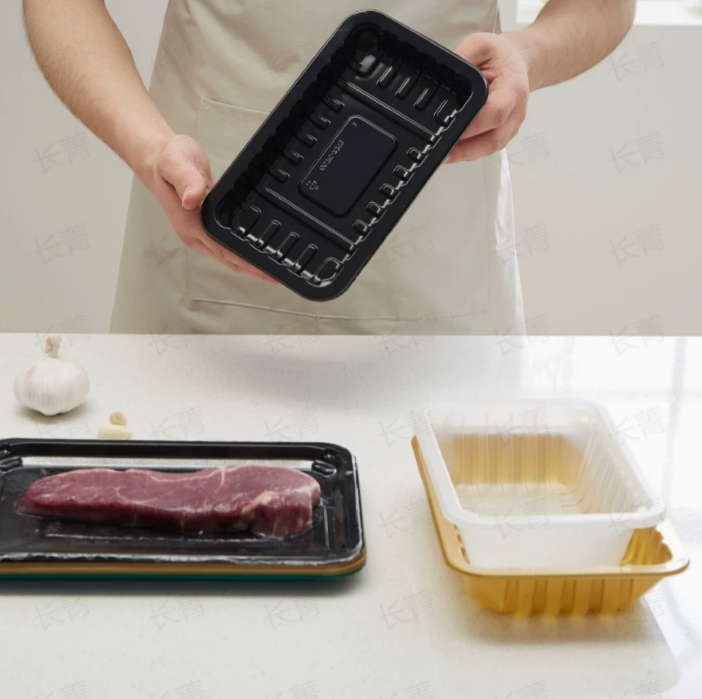
Thermoplastic Films for Custom Blister Tray Thermoforming
PVC: Inexpensive Clarity, With Changing Regulatory Concerns
PVC is still a primary choice for thermoforming because it is less expensive than other options and also provides good visibility so customers can see the product while it is still protected. However, there is increasing scrutiny for certain additives, so-called plasticizers, and in particular, those that are phthalate-based. The European Chemicals Agency, for example, has imposed restrictions on DEHP for use in medical packaging since 2021. Because of this, most companies have begun to reserve the use of PVC for consumer goods rather than more regulated medical products. Due to the flexibility of PVC, it is possible for manufacturers to produce highly detailed trays, even at high speeds over 30 cycles per minute. In 2022 PharmaTech reported that 38% of all pill blister packs used PVC. However, many pharmaceutical companies are now seeking alternative materials in order to meet more sustainable policies and in light of recent regulatory changes around the use of certain chemicals.
Stiffness, Clarity, and Recyclability: Advantages of PET and PETG in Custom Blister Packaging
PET and PETG offer great options for custom blister packing. PET and PETG are strong materials that resist damage and clear appearance that assists with branding, and chemical resistance. Very often, custom blister packaging needs to protect delicate medical instruments. PETG gives a great option since its damage resistance ability is three times greater than that of standard PET. Both materials are accepted in recycling systems and, as reported by the EPA in 2023, PET recycling is at about 29%. Both materials are also great in manufacturing as they hold memory within the 90 degree - 110 degree Celsius range. More and more electronics companies are also turning to PETG as it provides static charge dissipation, something critical to the protection of delicate electronics during transit and assembly line operations.
Improving Barrier Properties Using PVDC and PCTFE Coatings on High-Sensitivity Custom Blister Tray
Compared to other films, PVDC reduces water vapor transmission by about 98%, which is why products stay fresher for extended periods of time on retail shelves. PCTFE (Aclar®), on the other hand, has very low moisture permeability and can allow for the stability of sensitive drug products for 5 years before they expire. Coatings for both films should be treated with care between 120 and 140 degrees Celsius during the thermoforming process to avoid damage to the coatings. Recent advances have led to the production of PCTFE laminates that are only 25 microns thick. Such materials are economical and meet all of the requirements of the USP <671> test for materials used in the manufacture of parenteral drug containers.
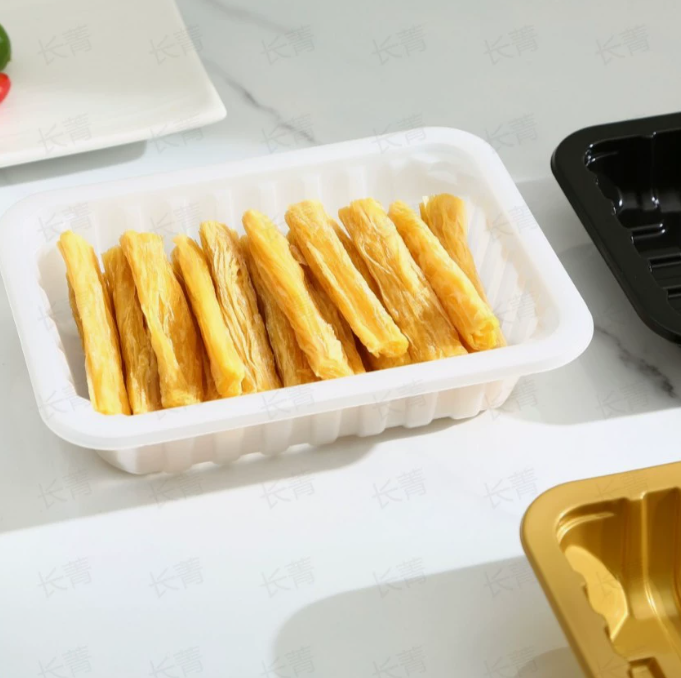
Custom Blister Trays with Extended Shelf Life High-Barrier Metal Systems
Foil Laminate: Moisture and Oxygen Barrier Champion
As for aluminum foil laminates, they give exceptional shelf life stability to custom blister trays. These materials, due to the metal layer, are non-porous and provide extreme barriers to moisture (almost negligible vapor transmission) and greater than 99% barrier to oxygen, making them invaluable for moisture reactive pharmaceuticals and sensitive diagnostics. Furthermore, the metal layer also offers full protection from light, which is important for materials that are light reactive. There are some considerations, however, with regard to the design of packaging solutions that involve aluminum. There is the potential for high opacity and for interference with metal detection systems used in automated packaging lines.
Cold-Form Foil (CFF): A Multi-Layer Approach to Extreme Stability Demands
Cold Form Foil (CFF) provides unparalleled structural integrity and barrier protection. This is why it is ideal for more challenging blister tray applications. Unlike most other thermoformed films, which become thinner and weaker with deep draws, CFF achieves a uniform thickness over the entire part and maintains a good seal, even with complex geometries. CFF is constructed by laminating a layer of aluminum foil between layers of polyamide and PVC. This construction is highly resistant to punctures, making CFF an excellent choice for the protection of sharp surgical instruments and other delicate medical devices during transport. In laboratory tests conducted on aged samples, CFF demonstrated an oxygen transmission rate (OTR) of less than 0.5 cm cube/sq m/day. This performance exceeds the barrier requirements of the pharmaceutical industry by 3 times, as well as consistently meeting the requirements of ISO 15378 for sterile packaging.
Crucial Guidelines in Choosing Key Materials for Custom Blister Tray Functionality
Analyzing Barriers: OTR, WVTR and Stability Testing in Practical Scenarios
In terms of the order of processes, the analytical measurement of the required barriers comes first for selection of the appropriate material and is determined by measurable parameters. The first parameter in this case is the Oxygen Transmission Rate or OTR, which determines the likelihood of deterioration of a product due to oxygen exposure. This measurement is given in cubic centimeters per square meter per day. The second parameter is the Water Vapor Transmission Rate (WVTR), which is determined by how well a barrier material retains moisture, measured in grams per square meter per day. In blister packaging, medicine manufacturers generally aim for OTR values to be under 1 cm³/m²/day and WVTR to be below 0.1 g/m²/day. In the laboratory, we can conduct a test, but we can’t simulate actual processes of nature as well as we can in the laboratory to test the conditions and variations in temperature and humidity. In the packaging industry, it has been shown that packaging that has been optimized and meets barrier standards has an almost 23% higher success rate in accelerated aging tests. Once materials are optimized, and validation is performed per ISO 15378, the standards of the product are maintained over time, and all materials are prepared and optimized for regulatory approval, if required.
FAQ
What materials are used for thermoforming blister trays?
Materials used typically include PVC, PET, PETG, PVDC, PCTFE, aluminum foil laminates, and Cold-Form Foil (CFF).
What are OTR and WVTR and why are they important?
The OTR and WVTR are indicators of how well materials breathe, specifically, how well they let oxygen and moisture pass through, which is important for protecting blister pack contents.
Why is PETG used for packaging electronics?
PETG is used because it has the ability to dissipate static, which is important in the packaging of electronics.