
 EN
EN



Regulatory and Environmental Pressures Driving PET Clamshell Reformulation
Life Cycle Impact: Carbon, Energy, and Logistics Footprint of Conventional PET Clamshell Packaging
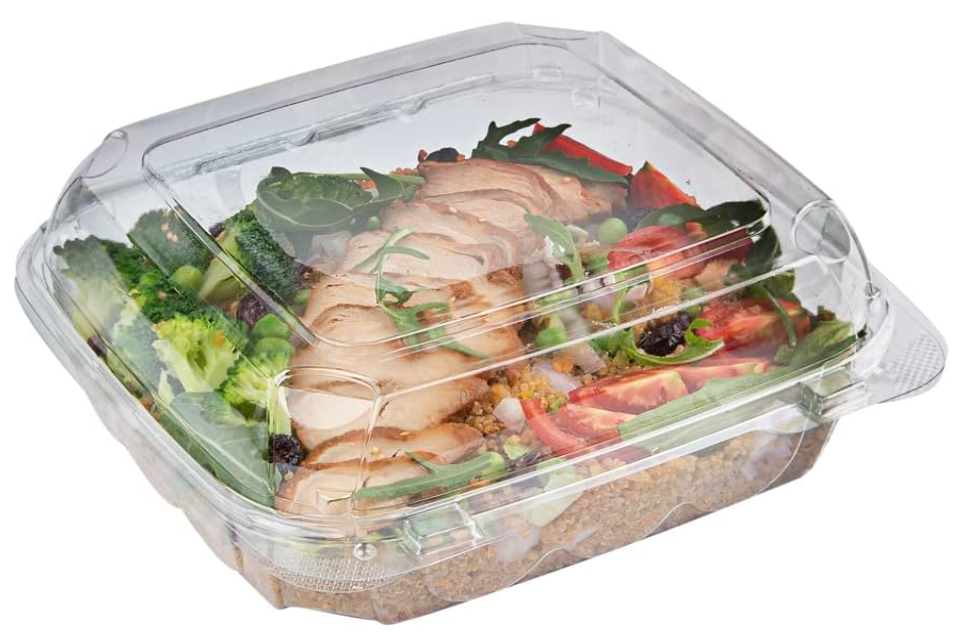
Standard production methods for PET clamshells result in unnecessary carbon emissions. The production of new PET resins consumes large amounts of fossil fuel-based energy. There are issues related to the emissions involved in their transportation as well. Though individual clamshells are light, they take up a lot of space. This requires a suboptimal transport effiency and increase the fuel consumption to transport the clamshells. End of life issues are as bad. In the 2023 report of the U.S. EPA about 29% of PET thermoforms are recycled. This figure is not significantly better than the 29.1% recycling rate of standard PET bottles. There are a large number of clamshells that are not recycled because of the sorting issues and the dominant contamination problem. The result is that many of these clamshells are either landfilled or incinerated, releasing the greenhouse gases contained in the clamshells. The balance of environmental costs for the product life cycle has forced companies to begin searching for more sustainable alternatives.
Deadlines ahead for EU SUP Directive, US state bans, and EPR regulations focused on pet clamshells.
Regulations hitting the market are speeding up the reformulation of PET clam shell containers. Consider the Single Use Plastics Directive in the EU. This regulation prohibits the use of regulation non-recyclable packaging. Therefore, the designers of clam shell containers are being forced to design clam shell containers that are fully recyclable. States like California are also implementing regulations that will directly impact clam shell design. In particular, they have implemented tough plastic supply chain regulations along with EPRs that require a brand to finance the establishment of a recycling system for their packaging. These policies create a positive push for developing high quality containment solutions. Many are working to develop recyclable mono-material options with greater than 30% post-consumer recycled content for their products. Meeting the new regulations ahead of schedule will be a good for business and will also be required to meet the expectations of consumers.
Top Eco-Friendly PET Clamshell Alternatives: Performance, Scalability, and Commercial Readiness
PLA clamshells: Disposal and composting
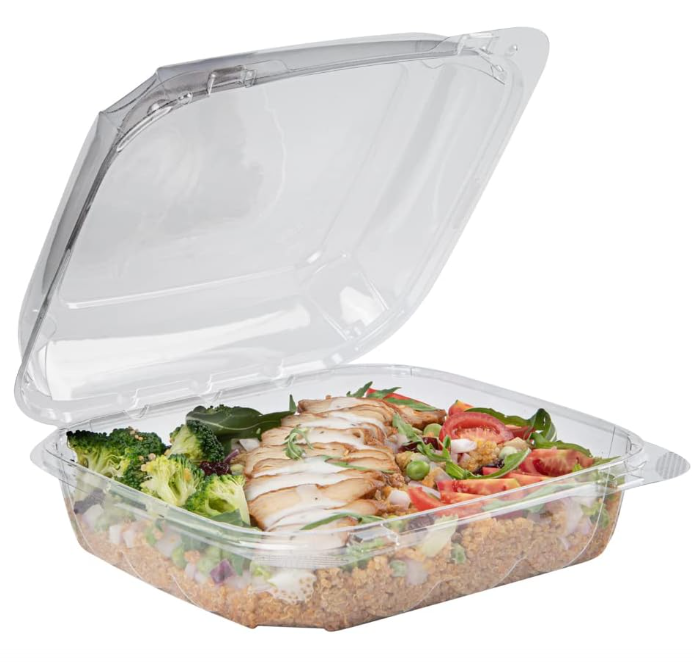
Replacing plastic PET clamshells with PLA bioplastic seems to be a good alternative. However, the disposal system must allow for suitable composting disposal locations, which are unavailable to the average user most of the time. PLA composts in about 90 days, but only in industrial composting, which less than 15% of U.S. counties have, according to a last year’s publication from BioCycle. Therefore, PLA ends up in a landfill and takes the same amount of time to decompose as plastics. PLA also melts at about 110°F and cannot be used for hot foods unless coated with some petroleum-based product. World Centric has been known to solve this with certified compostable liners but in fact, winning this material and compostable liner betting game for large scale operation compostables is nearly a paradoxically unsolvable challenge considering the raw material for the liner.
Innovations in moisture resistance and barriers compliant with the FDA for the molded fiber (bagasse, bamboo) PET clamshells.
Sugarcane bagasse and bamboo molded fiber alternatives have rapidly biodegradable and renewable sources and meet pet clamshell sustainability. Innovations developed recently have overcome the moisture weaknesses:
Nanocellulose coatings provide FDA-compliant grease barriers, and they don't contain PFAS.
Plant resin-based wax-alternative sealants provide 4-hour liquid resistance.
Hybrid fiber blends provide a 40% increase in structural rigidity over pure pulp.
These improvements enable molded fiber clamshells to be refrigerated, condensed, and oily foods for packaging. A 2024 Packaging Digest Study confirmed the above. Fiber-based alternatives, however, remain 30% more expensive than PET and require re-engineering design work on automated filling lines due to dimensional variability.
Next-Gen Strategies: High-Recycled PET and Hybrid PET Clamshell Solutions
rPET clamshells with 50% post-consumer content offer clarity, rigidity, and evoke sustainability messaging
More and more packaging designers are leaning towards rPET clamshells with 50% post-consumer recycled content, as they help strike a compromise between green initiatives and functional packaging. These containers decrease virgin plastic usage by about 30%, and retain important packaging attributes like clarity and structural integrity. Customers are able to see the product, and the walls are strong enough to protect the product during transportation over long distances. For packaging designers, the use of rPET shows a commitment to sustainable packaging. Customers increasingly demand transparent proof of environmental responsibility beyond the claims made on packaging. While food grade rPET is still a challenge, the state of recycled content, especially in regard to premium aesthetics, has improved significantly due to advances in recycled plastic washing. The adoption of rPET is a step towards achieving a circular economy in packaging and is increasingly important due to evolving producer responsibility regulations.
Barriers to Market Adoption: Costs, Supply Chain Integration, and End-of-Life Infrastructure
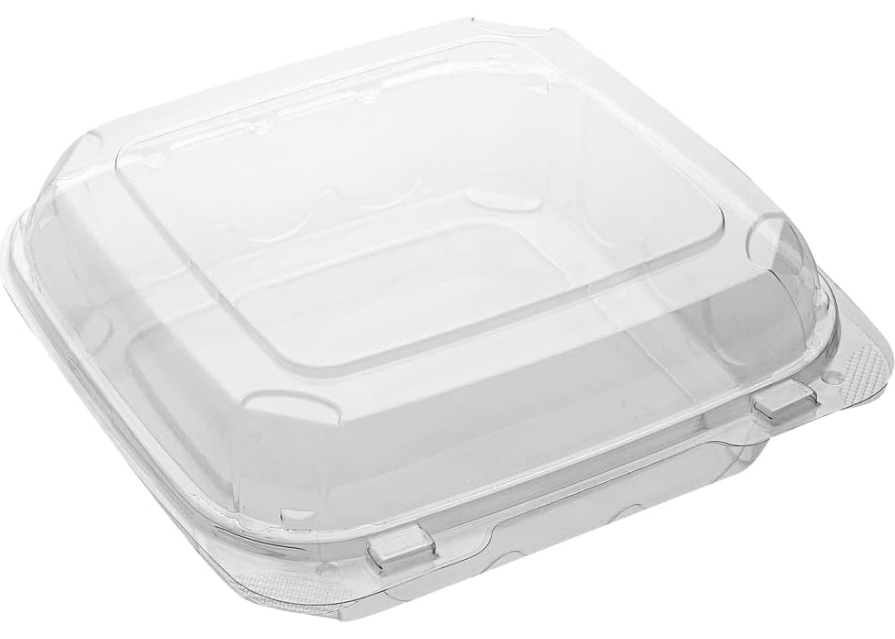
There are a number of challenges involved with switching to more sustainable PET clamshells. The most obvious, and the most impactful in the short term, is cost. Bioplastic and recycled PET clamshells are usually 20 to 50 % more expensive than “virgin” plastic options, meaning cost-conscious companies are less likely to adopt them. Then, we have the headache of addressing the supply chain. Manufacturers have to source new and different raw materials, invest in new machinery, and run tests on the new packaging throughout the entire shipping and handling cycle to determine whether the alternatives really work. After all, “green” packaging promises are undermined when materials cannot be disposed of responsibly and instead languish in landfills. Shifting consumer behavior won’t matter when disposal and recycling infrastructure are broken.
Industrial composting for PLA alternatives exists in less than 15% of U.S. municipalities.
The U.S. lacks recycling streams for rPET clamshells.
Rates of recycling contamination often exceed 30% when new materials are introduced into the recycling stream.
These systemic issues require new collaboration across entire sectors of the recycling, and packaging value chain, including municipal and material recovery facilities, and standards organizations.
FAQ
What are the main environmental challenges of conventional PET clamshell packaging?
The main challenges are high levels of carbon pollution, excessive energy consumption and landfill and incineration as the end of the line for the materials’ low recycling rates.
What is the effect of global regulations on the reformulation of PET clamshells?
The EU's Single Use Plastics Directive and state policy bans in the U.S. have made manufacturers responsible for developing recycling systems and incentivizing the use of recyclable, and thus less plastic, packaging.
What are the pros and cons of alternatives made of PLA and molded fiber?
Although PLA is compostable, molded fiber is biodegradable and sourced renewably, but at a higher price, and the systems have to be reconfigured.
What is driving the interest in rPET clamshells?
The clamshells are rPET, meaning they are sustainability guaranteed, using less virgin plastic while still allowing consumers to see and protect the products they are purchasing, meeting consumer and regulatory expectations.