
 EN
EN



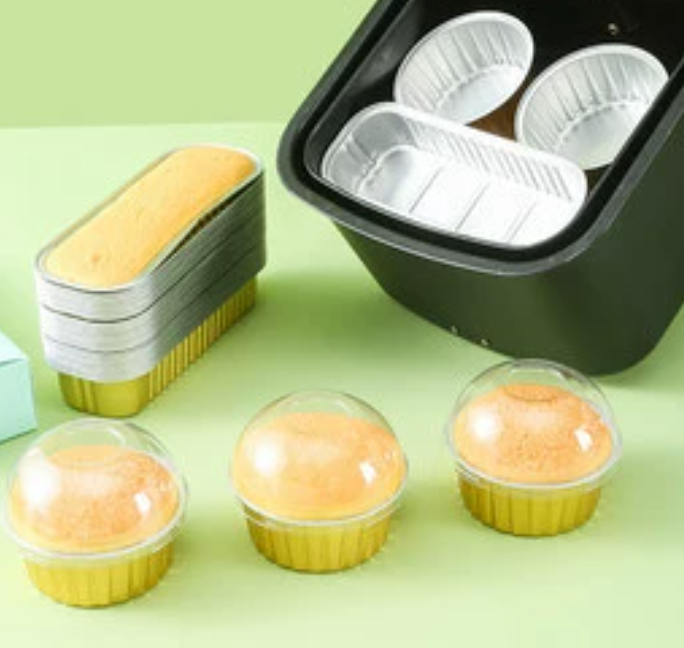
Thermoforming: Process of Choice for Plastic Tray Production
Core Stages: Heating, Forming, Cooling, Trimming
Thermoforming offers unrivaled efficiency in tray production within the the four stages previously outlined above. The process begins by selectively heating sheets of plastic to the ductile temperature of 300°F to 400°F. Surpassing either of the target temperatures would lead their structural integrity to degenerate, thus undesirably compromising their temperature zoning. This preconditioned sheet is then formed over by employing the use of either vacuum suction or compressed air over precision aluminum tooling. The thermoplastic gets cooled quickly in order to solidify the shape and reinforce the temporary bonds. Once the shape is solidified, the CNC Guided process trims all of the edges of the sheets. This process also executes flash and surplus material and delivers finished frames to potential customers. The efficiency of the process is such that it exceeds production to upwards of 1,500 pieces per hour while being faster than injection molding trims. All of the byproducts of the CNC Trimming are ground up, and superfluous raw plastic is fully recyclable, thus establishing sustainability.
Vacuum or Pressure Forming? An Objective Analysis
Method & Type Specification Advantage Price Range Adaptability
Vacuum Forming & Shallow Trays Ship in High Volume Affordability Low
Pressure Forming & Complex Geometries Intricate & Textured Affordability High
Pressure forming offers an optimal solution for competitively priced, shallow, bulk produce trays. The productive potential of pressure forming over vacuum forming lies within the bounds of ±5 0.005 in. Pressure forming employs an added 15 to 500. The sharp corners and edges required fluid design integration, while taking the edged concept to its maximum, pressure forming supports even thicker sheets, up to 0.500 in. wherein rigid design is achieved.
Rigid, Multi-Compartment Plastic Tray Made with Twin-Sheet Thermoforming
In Twin-Sheet Thermoforming, two sheets are separately formed, heated, and shaped. These sheets are bonded together and sealed along the perimeter walls. This process is accomplished through the use of controlled heat and pressure. The result of this process is rigid, hollow-core trays and can be used for food separation as well as the organization of electronics and the packaging of pharmaceuticals. In contrast with the single-sheet variant, a twin-sheet construction reduces weight by as much as 50% and delivers three times the construction strength. Twin-Sheet Thermoforming uses hollow handles, custom dividers, and load-bearing walls, which are built as opposed to being added post-process. The trays support static loads of 200 pounds and as many as 12 segregated sections. These trays maximize space and reduce the load during transport.
Choosing a combination of materials requires balancing performance, restrictions, and circularity. Here are some of the core materials:
Material Clarity Food Safety Certification Max Temp Resistance Recyclability
PET 95%+ transparency FDA/EU compliant 70°C (158°F) Widely recycled
PP Semi-opaque BRC/ISO 22000 135°C (275°F) High recyclability
HDPE Opaque Global food-grade 120°C (248°F) Commonly Recycled
PVC High clarity LFGB certified 65°C (149°F) Limited recycling
PS Crystal-clear FDA-approved 75°C (167°F) Low recyclability
PET surpasses the rest when it comes to in-store food displays due to its clarity and impact resistance. It is also the barrier of oxygen, preventing 99% of oxygen ingress, and safe for fresh food displays for up to 2-3 times the shelf life (Food Packaging Forum, 2023) . PP is the preferred material for frozen foods and containment in sterile environments. It is the ideal candidate for trays as it is a great mix of the durability, low cost, and the ability to withstand the challenges of the cold chain. HDPE is the standard for industrial use set by its superior chemical resistance. PVC is particularly a more difficult material as compared to others due to the chlorine in the PVC alongside rigid restrictions of reprocessing.
Insights on Shelf Life and Thermoformability of PET and PP Trays
In addition to PP, PET trays help to increase the sell-by date of trays that are used to hold products like cheese, meats, and freshly prepared foods in offerings, due to a better barrier to moisture and oxygen. The addition of thermoformability helps PET trays with seals that are vacuum skin tight. Additionally, PP trays, while being less transparent, also have a greater range of thermal stability. But, PP also has flexibility, while PET is focused more on maintaining the inline preservation seals and visibility.
What to Know Before Starting Production of a Progressive Mold for an Automated Tray Manufacturing System
Cavity Geometry, Draft Angles, and Ejection Systems for a Successful Tray Production
Success in tray production is the result of a collaborative system of three aspects of mold design. During the manufacturing of a tray, cavity geometry has to account for the applied polymer of choice and the post mold polymer shrinkage for a uniform consistency. Draft angles of 1° to 3° help to avoid the vacuum lock effect and the scuffing effect at the vacated surface to the molding surface. Ejection systems have to account for a precise placement of ejection pins, a force distribution, and a timing system to avoid defects such as the warping, stress, and cosmetic effects. When the system is combined and optimized, the production cycle is shortened by margins up to 15-20% while maintaining the standards of 3% for a scrap loss, which is of a high importance for food and medical packaging.
Thermoforming vs. Injection Molding: Which Plastic Tray Process to Use
There are three deciding factors that need to be considered to select between thermoforming or injection molding: volume, complexity, and costs. Thermoforming uses heating and shaping of a plastic sheet to form a mold. Sheets are then vacuumed or compressed to form the mold. Thermoforming is best used for low to intermediate volume production of less complex plastic trays. These trays include seafood containers, agricultural containers, and plastic clamshell trays. Benefits of thermoforming include low investment cost for the tools, easy to change molded forms, and no longer than a 3-week prototype wait. This makes optimal for temporary seasonal SKUs and larger format applications.
Thin walled plastic trays with dividers or even plastic trays that snapped together with hinges. This is where injection molding excels. Injection molding falls between 60 and 80% higher than thermoforming for tooling costs. This cost can be justified with as low as 10,000 units for the molded trays. These savings would be seen particularly for higher volume industrial applications. For push diagnostic and BioMedical trays, the cost savings could even be seen for only 100,000 units.
Hypothetically, producing a molded Bio Medical tray vs. a thermoformed tray could make the molded tray 40% cheaper.
Thermoforming is prioritized for cost, complexity, volume of spatial trays.
Injection Molding is best used for complexity, precision, and high volume trays.
This is the best strategy for mold applications.
FAQ Section
Thermoforming
Thermoforming is a sheet plastic molding process that heats the plastic sheets to a pliable form. Sheets are then vacuumed or compressed to form the mold. Sheets are then rapidly cooled to solidify and then cut to remove the excess.
What is the difference between vacuum forming and pressure forming?
Vacuum forming uses suction only to achieve the desired shape, while pressure forming relies on compressed air to produce finer details and achieve greater accuracy.
What is the meaning of twin-sheet thermoformed trays?
Twin-sheet thermoformed trays are trays that are made by bending and stretching two sheets that have been fused together.
What are the materials that are used for plastic trays?
The materials adopted include PET, PP, HDPE, PVC, and PS due to their varying characteristics, components and general suitability for different applications.
When should you choose thermoforming over injection molding?
Use of thermoforming is justified for low to medium production volume of trays that are less complex, while injection molding should be used to create highly complex and varied trays.